






10 Reasons Stripe Rejects Businesses (And How to Improve Your Chances of Approval)
Understand ten common Stripe application issues, from unsupported countries to incomplete documentation, and learn how to prepare your business for review.

Learn the most common reasons Stripe declines business applications and the practical steps founders can take to improve account approvals.
Launching a business is exciting but payment processing can sometimes become a daunting task.
Every year, thousands of founders create websites, register companies, and prepare to accept payments online, only to discover their Stripe application has either been rejected or placed under review. For many entrepreneurs, especially those building international businesses, this can be frustrating.
The good news is that Stripe doesn’t reject businesses at random. Its review process is designed to protect customers, reduce fraud, and ensure businesses comply with financial regulations.
Whether you’re starting an e-commerce store, SaaS company, consulting agency, digital marketing firm, or online education platform, understanding how Stripe evaluates businesses can significantly improve your chances of approval.
Here are ten most common reasons Stripe rejects businesses and what you can do to avoid them.
1. You’re Registered or Operate in an Unsupported Country
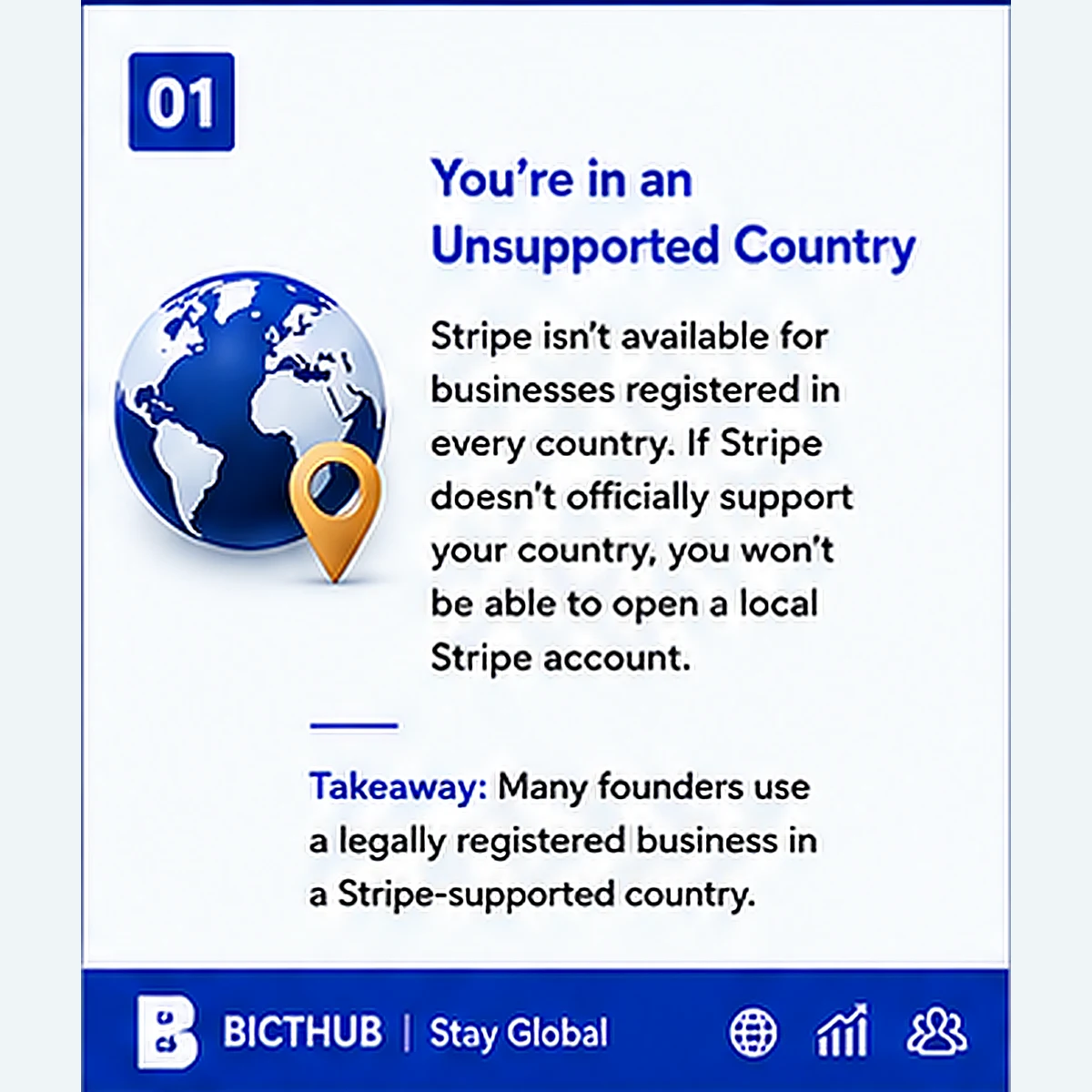
One of the most common reasons founders cannot use Stripe is because their business is registered in a country where Stripe doesn’t officially operate.
Stripe only supports businesses incorporated in specific countries. If your company is registered elsewhere, you may not be eligible to open a local Stripe account.
Many international founders legally solve this challenge by incorporating a business in a Stripe-supported jurisdiction such as the United States.
2. Your Website Looks Incomplete
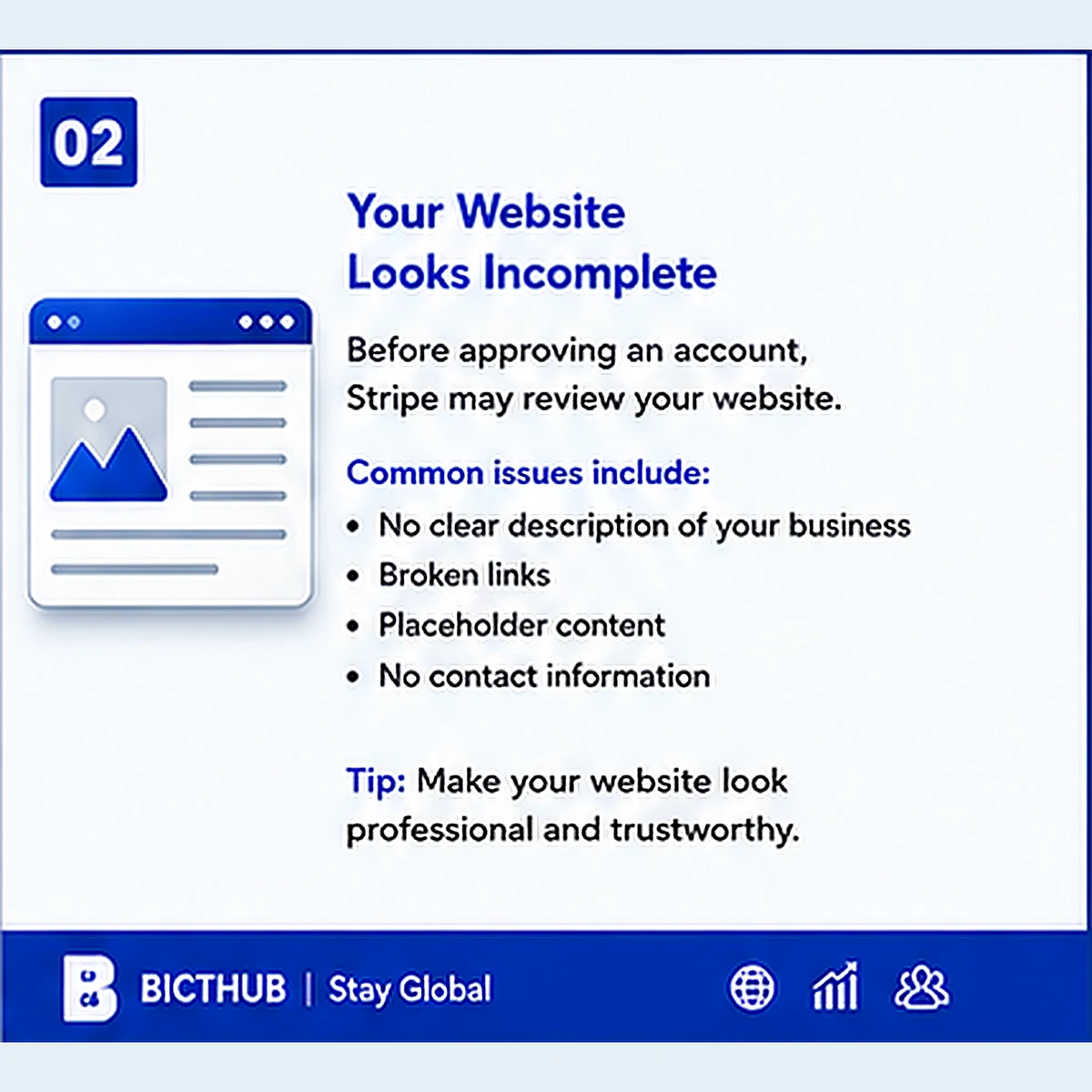
Your website is often the first impression Stripe has of your business.
During the review process, Stripe may examine your website to understand what your business does and whether it appears legitimate.
Common issues include:
- Placeholder text
- Broken links
- Missing product or service descriptions
- No contact information
- Missing Privacy Policy or Terms of Service
- Pages still under construction
A professional website demonstrates credibility and makes it easier for Stripe to verify your business.
3. You’re Selling Restricted Products or Services
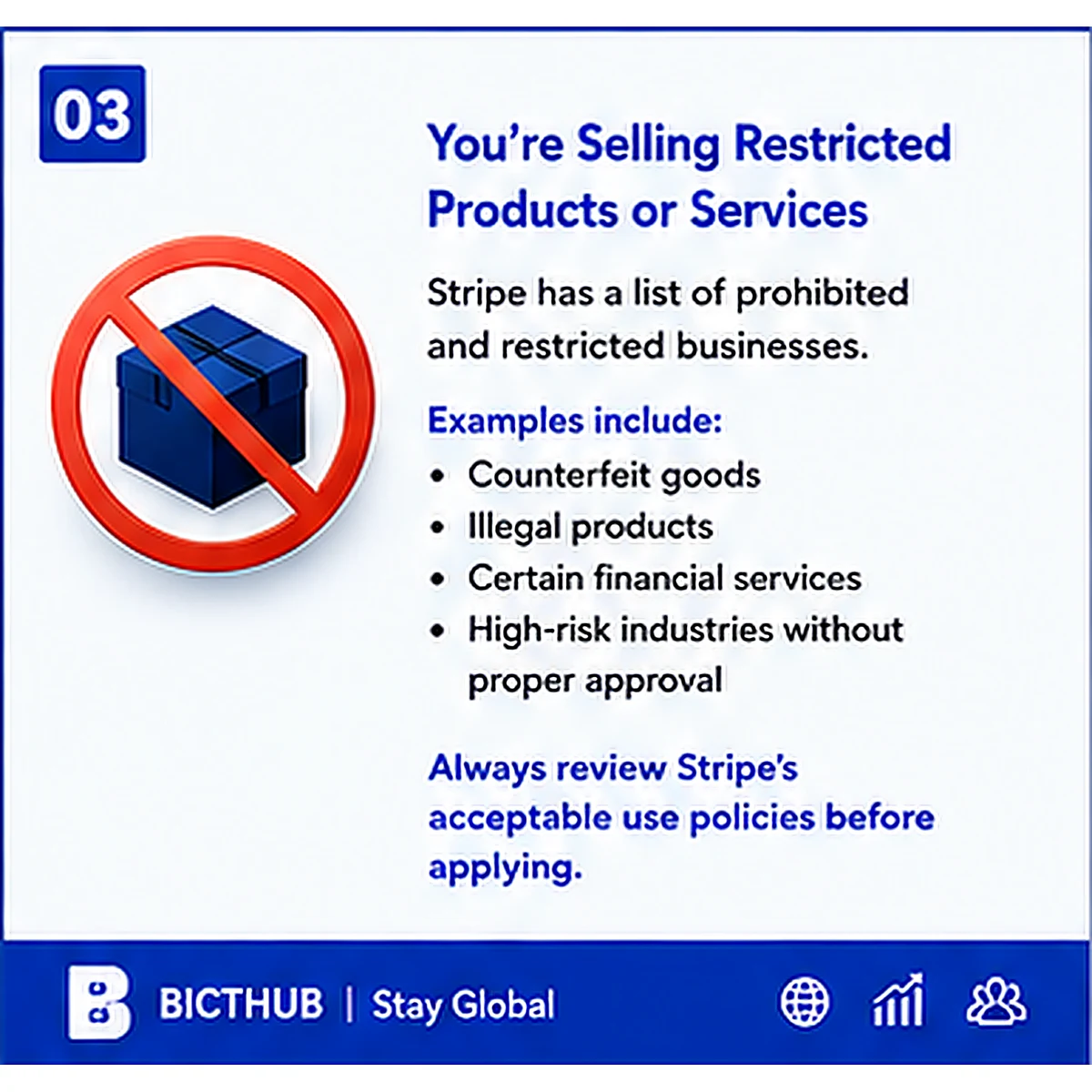
Stripe maintains an extensive list of businesses it prohibits or restricts.
These restrictions exist because certain industries carry higher legal, financial, or fraud risks.
Examples include:
- Counterfeit goods
- Illegal products
- Certain gambling businesses
- Unlicensed financial services
- High-risk investment schemes
- Businesses violating intellectual property laws
Even if your business is legal in your country, it may still fall under restricted categories on Stripe.
Always review the acceptable use policies of Stripe to be certain.
4. Your Business Information Doesn’t Match
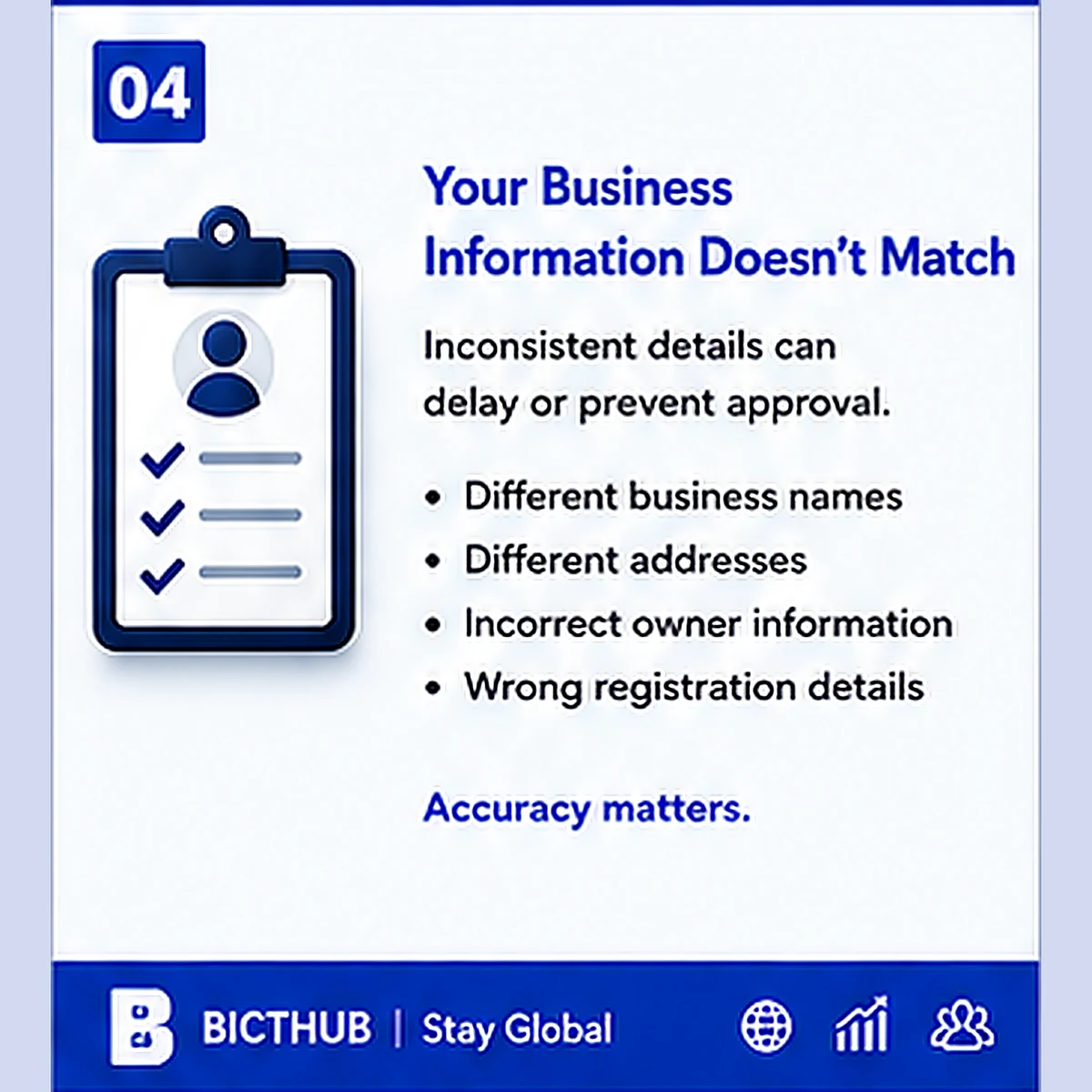
Consistency matters.
Stripe compares the information you provide across multiple sources, including:
- Business registration documents
- Tax records
- Website
- Bank account
- Identity documents
Problems often occur when:
- Business names differ
- Addresses don’t match
- Ownership details are inconsistent
- Registration information is outdated
Even minor discrepancies can delay approval while Stripe requests additional verification.
5. Identity Verification Fails
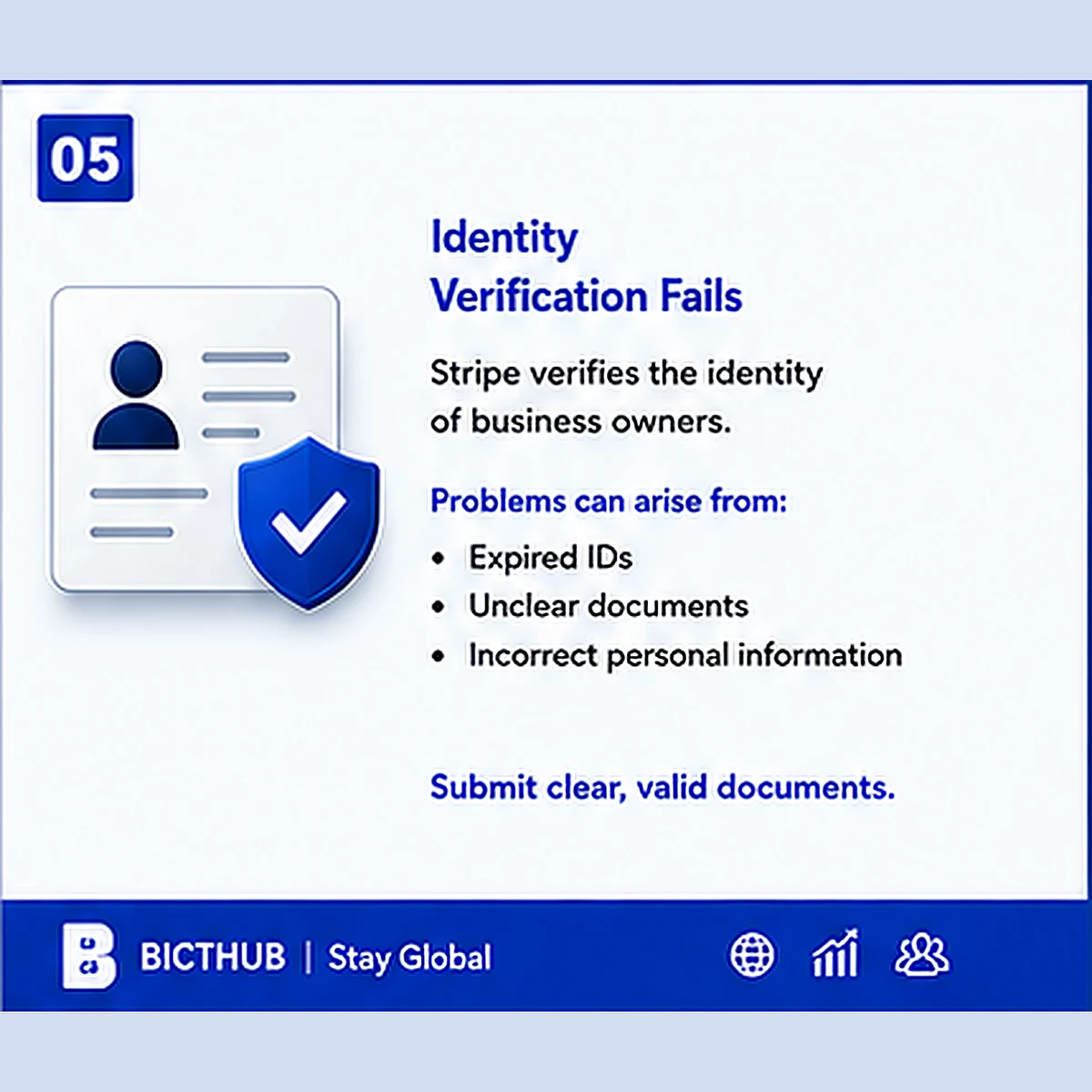
Financial institutions are required to verify the identities of business owners.
Stripe is no exception.
Identity verification may fail because:
- Your government ID has expired.
- Documents are blurry or cropped.
- Personal information doesn’t match your application.
- The uploaded document is unreadable.
Always upload clear, high-resolution copies of valid government-issued identification. A few extra minutes checking your documents can save days or weeks of delays.
6. Your Business Lacks an Online Presence
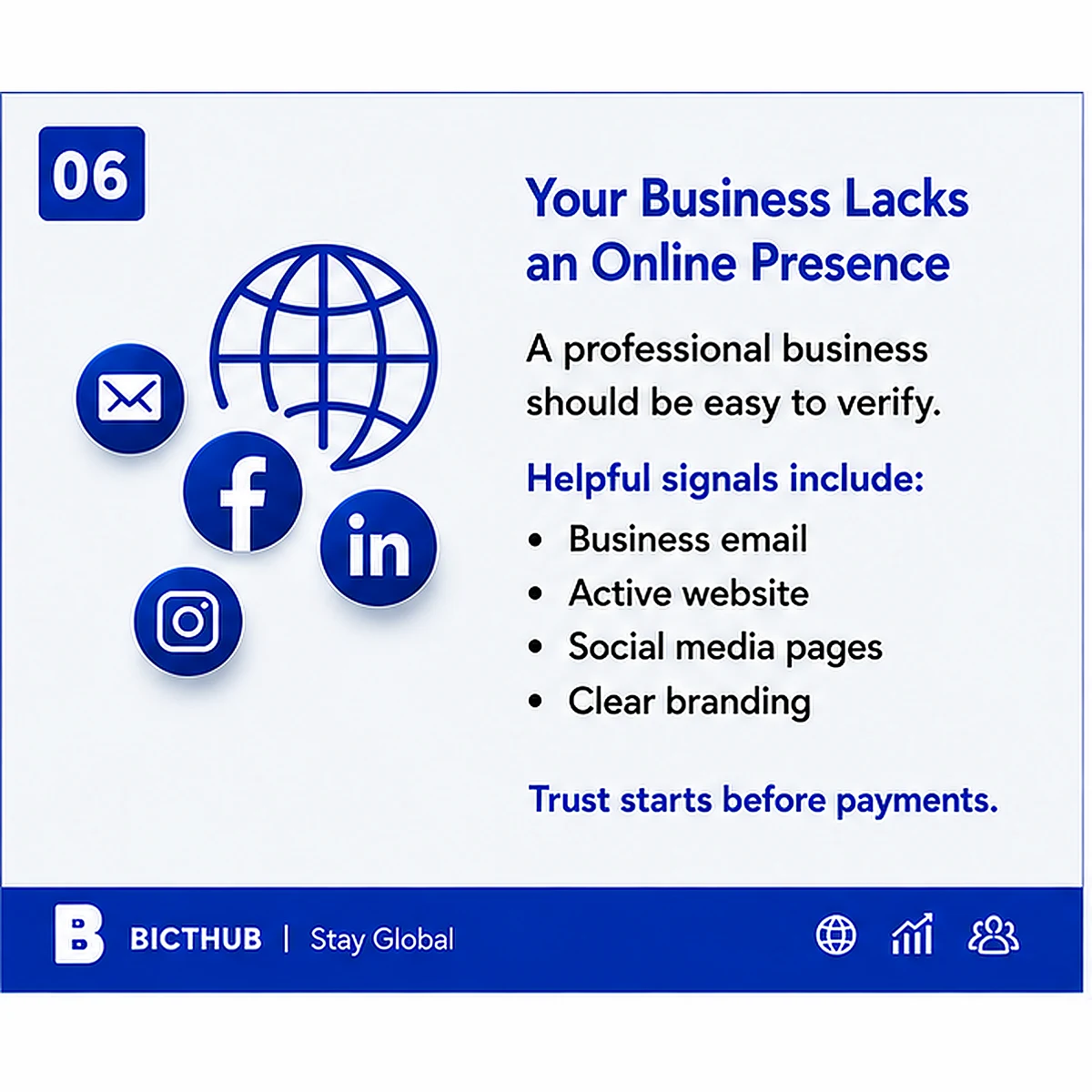
Modern businesses are expected to have a digital footprint.
Stripe looks for signs that your company genuinely exists and serves customers.
Helpful trust signals include:
- A professional website
- Business email address
- LinkedIn company page
- Facebook page
- Instagram profile
- Consistent branding across platforms
An active online presence helps Stripe understand your business and reduces uncertainty during review.
7. You’re Missing Required Compliance Documents
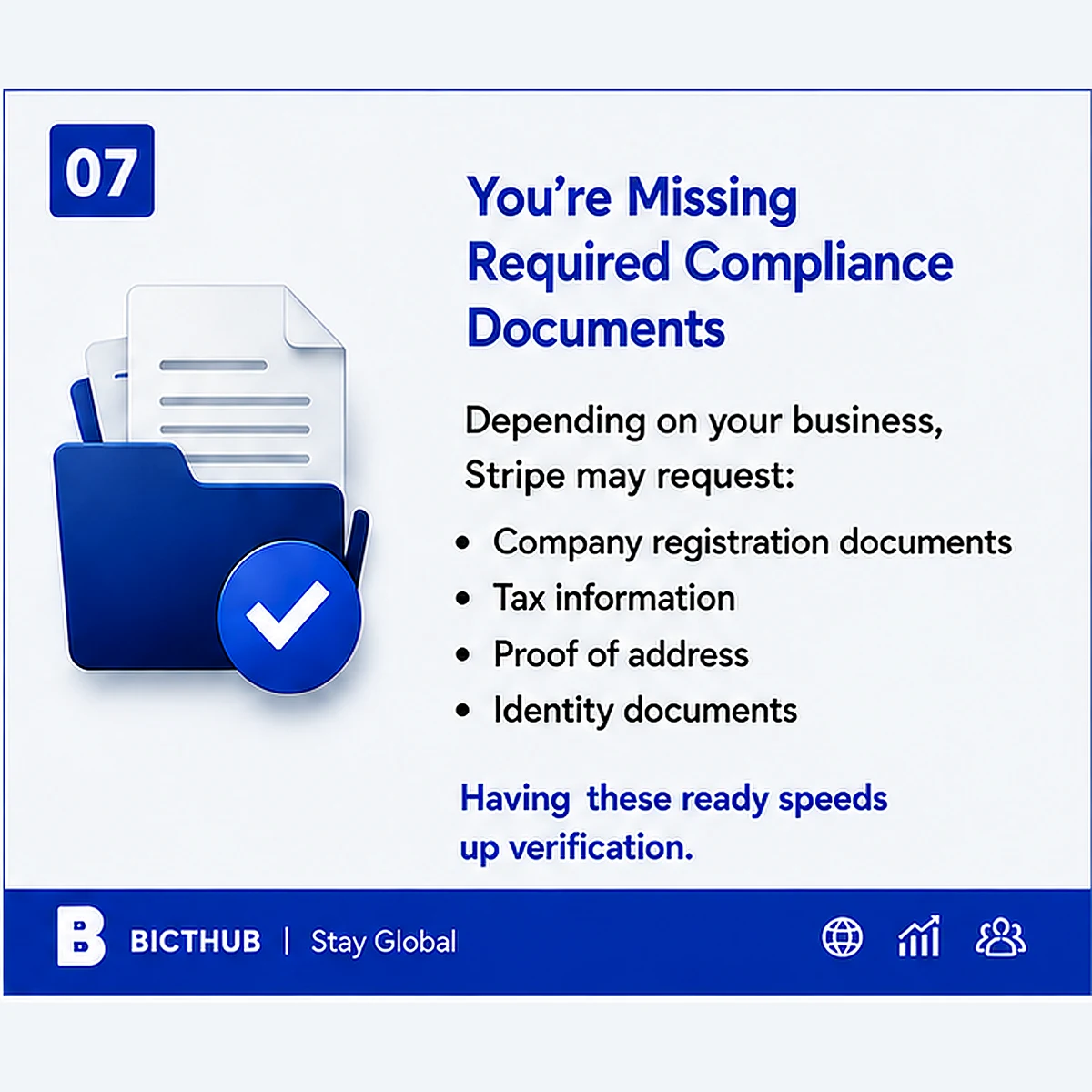
Depending on your business type and location, Stripe may request additional documents before approving your account.
These may include:
- Company registration certificate
- Employer Identification Number (EIN)
- Tax information
- Proof of address
- Government-issued ID
- Ownership verification documents
Having these documents ready before applying makes the process faster and smoother as preparation reduces unnecessary delays.
8. Your Business Model Appears High Risk
Some industries naturally receive greater scrutiny because they experience higher chargeback rates or increased fraud.
Examples include:
- Subscription businesses
- Digital products
- Online coaching
- Financial services
- Cryptocurrency-related businesses
- Dropshipping businesses with long delivery times etc
Being categorized as higher risk doesn’t automatically mean rejection.
Instead, Stripe may ask for additional information about your operations, fulfillment process, customer support, or refund policy.
9. You Apply Before Your Business Is Ready
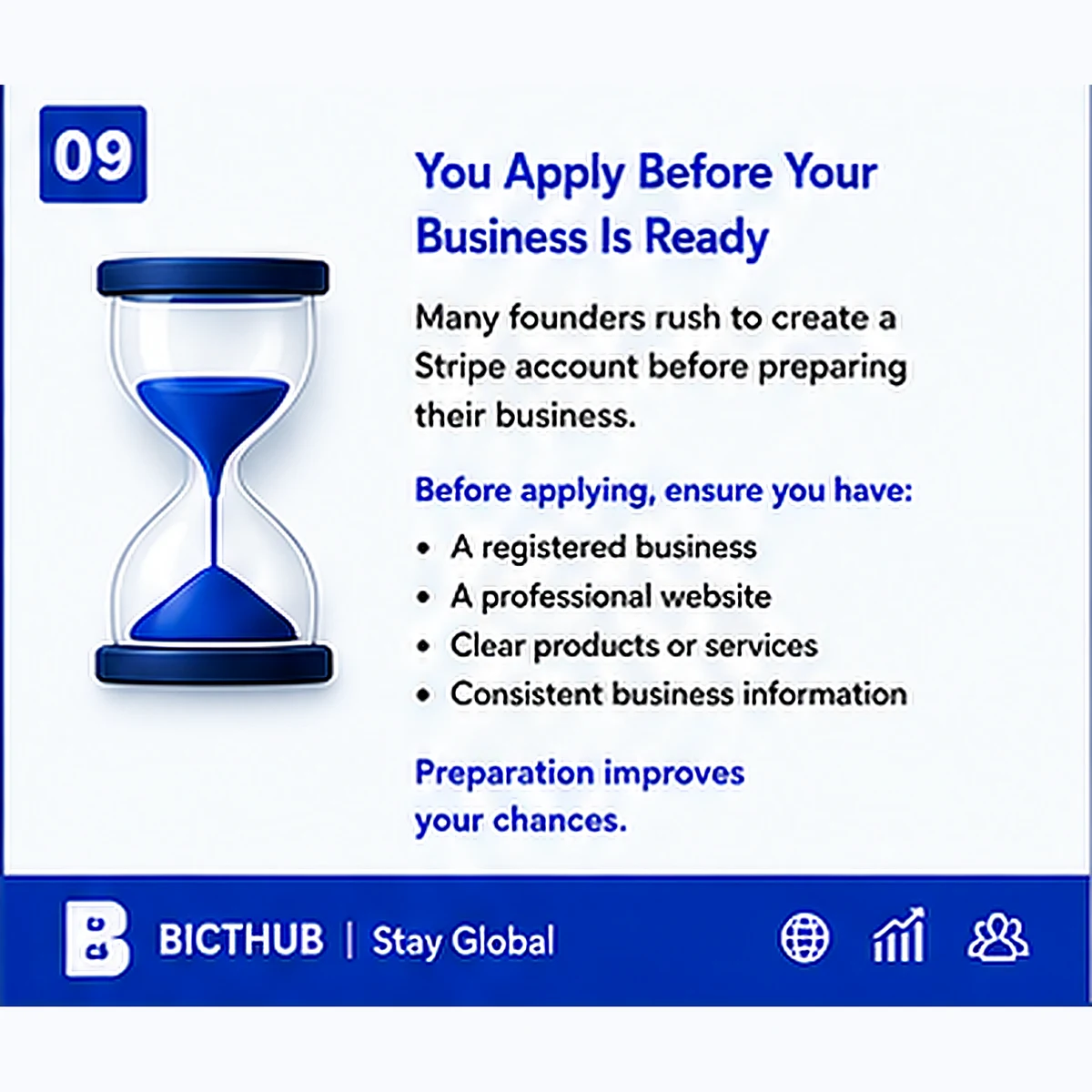
Many entrepreneurs rush to create a Stripe account immediately after registering their business.
Unfortunately, that’s often too early.
Before applying, you should ideally have:
- A registered business
- Professional website
- Clear products or services
- Contact information
- Business email
- Privacy Policy
- Refund Policy
- Terms of Service
The more structured your business appears, the stronger your application becomes.
10. You Haven’t Built Enough Trust Signals
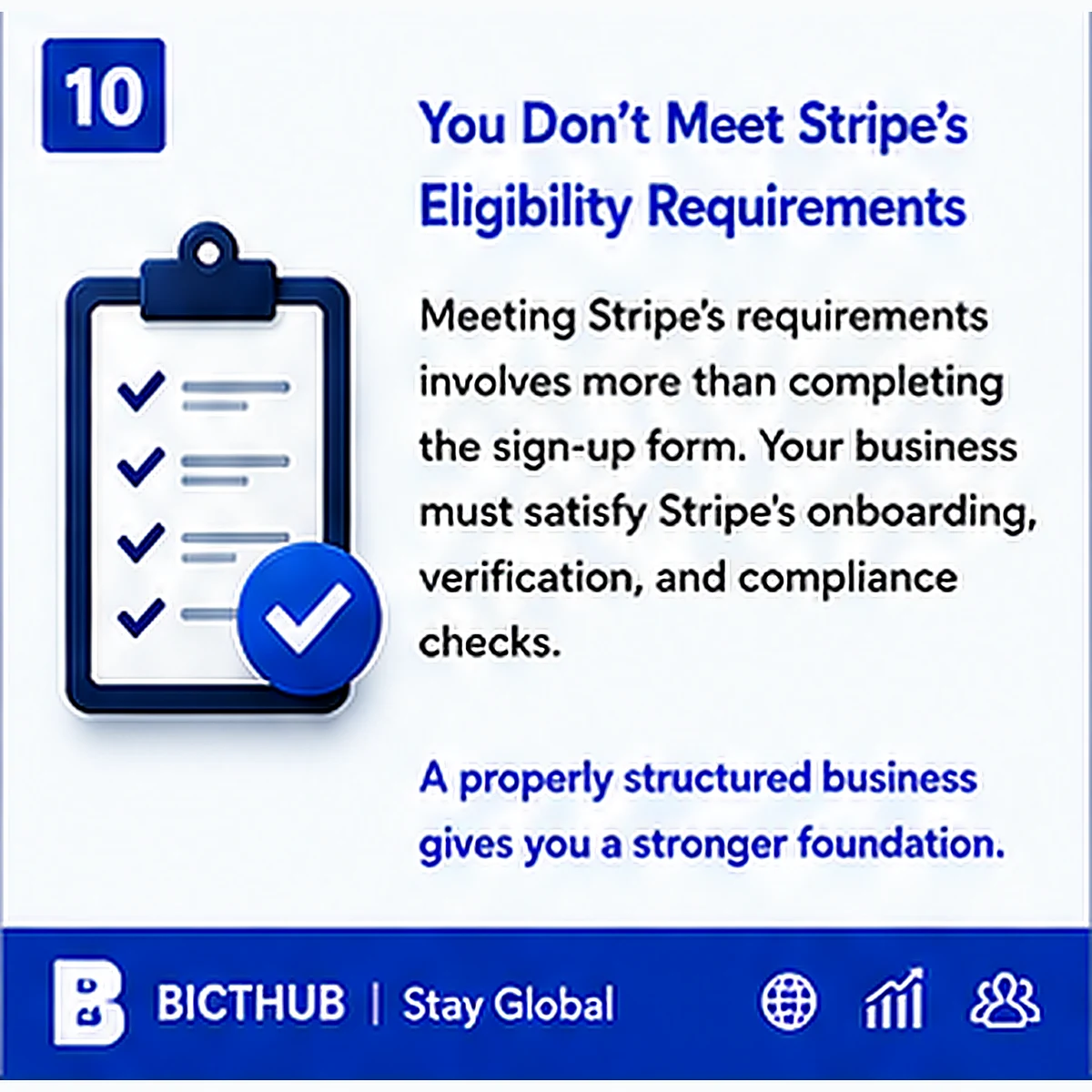
Meeting Stripe’s requirements involves more than completing the sign-up form. Your business must satisfy Stripe’s onboarding, verification, and compliance checks. A properly structured business gives you a stronger foundation.
Stripe evaluates more than documents. It evaluates confidence.
Businesses that inspire trust generally have:
- Clear branding
- Transparent pricing
- Professional communication
- Responsive customer support
- Consistent business information
- Active online presence
- Complete documentation
When everything aligns, your application becomes much easier to verify.
Building trust isn’t about passing an application but creating a business customers and financial partners can confidently engage.
By ensuring your business is properly registered, maintaining a professional website, preparing your compliance documents, and presenting consistent business information, you dramatically improve your chances of approval.

BICTHUB helps entrepreneurs register a US company, obtain an EIN, set up a US business bank account and build a global-ready business foundation. Send us a DM with “STRIPE” to learn how to get started.
Expanding globally starts with building the right business foundation.
At BICTHUB, we help entrepreneurs establish compliant businesses ready for global operations.
Our services include:
- Incorporating US LLCs and C-Corporations
- Obtaining Employer Identification Numbers (EINs)
- Setting up US Business Bank Accounts
- Providing business compliance support and more
Email BICTHUB for practical insights on global entrepreneurship, business incorporation, startup growth, and accessing international markets.
Follow @bicthub for insights that take you global 🌍
#Startup #Business #Capital #Entrepreneur #Founders